Our initial tree inventory
We have walked as much of our property as we can and worked on our tree identification skills to get an accurate inventory of our trees. Our woodland is largely made up of maple, beech, birch, cherry, oak, tulip poplar, and aspen trees. There is some magnolia and hickory throughout and stands of locust along our field. We also have some scattered sycamores and walnuts, patches of hemlocks, and white pine.

What makes a tree desirable to us?
We are taking several factors into consideration for our trees:
- Primarily, if they are native to our area
- How much biodiversity they support—both in quantity in quantity
- How many native insects they host
- If they host endangered species
- If they provide hard masts (nuts) or soft masts (like berries) throughout the year
- Prioritizing keystone species
- White oak
- River birch
- Introducing new species to our property first to establish new growth
- Ease of growth
- Availability of seeds, seedlings, or transferable plants

Encouraging oak growth
We have a mixed presence of white, red, and chestnut oak on our property. We hope to encourage the growth of all three species.
Our biggest oaks are roughly 12 inches in diameter, but many of the trees are much younger. There are oaks throughout the entire woodland, but in a few spots, they are concentrated on the edges. We’re taking advantage of the extra sunlight these oaks can already receive and adding brush around young trees to create natural protection from nibbling deer. We cleared some shrubs that were competing with the seedlings, such as invasive autumn olive and some natives, like witch hazel, that are still plentiful throughout other parts of the property.
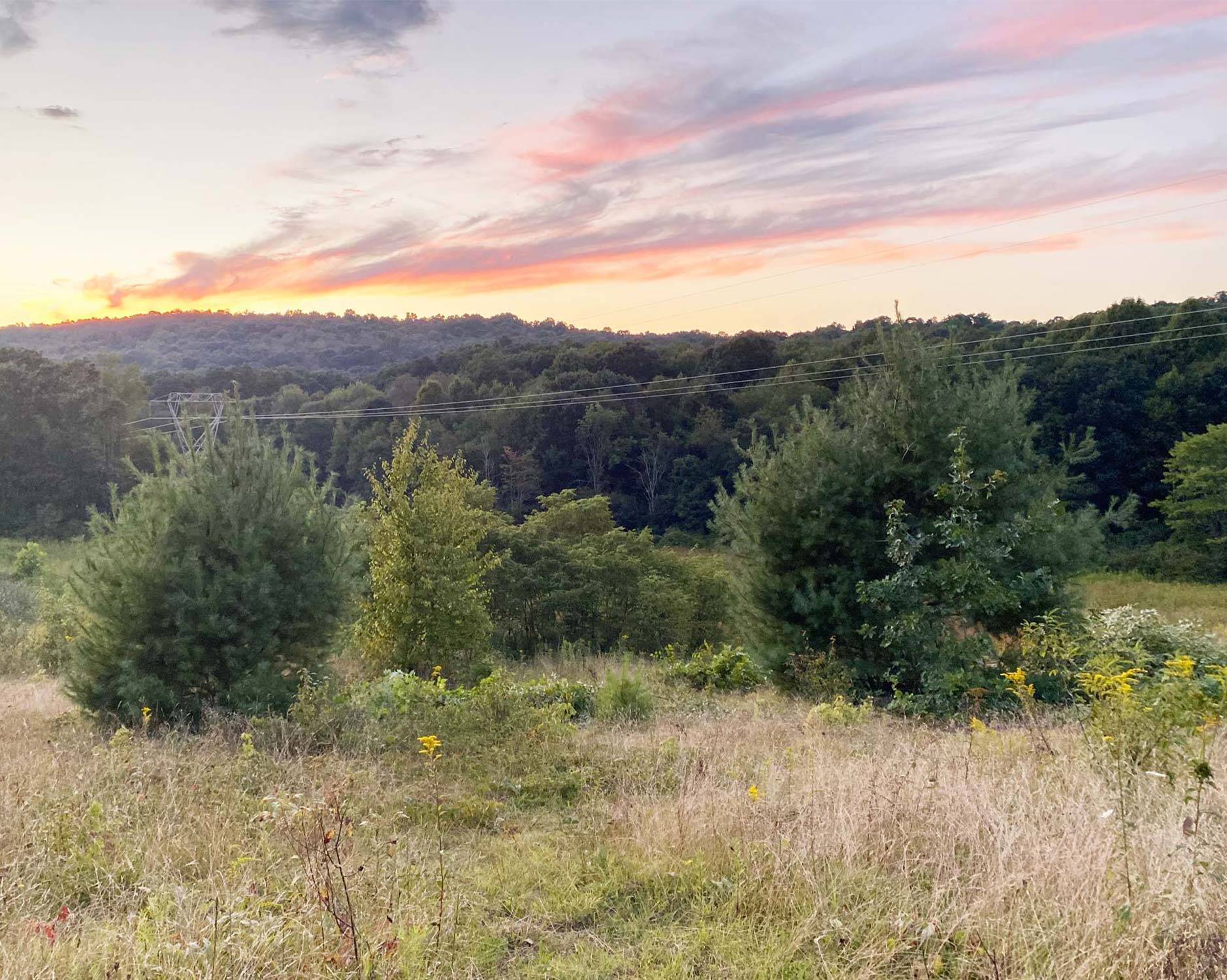
Look carefully in the photos below to see where we removed a maple that was crowding a young oak tree. In the first photo, there is a maple higher than the white pines below it. The second photo reveals the oak that was hidden from sight under the maple’s canopy.


In the future, we want to implement other ways to encourage growth including:
- Experimenting with tall deer fencing around small sections of young trees
- Transplanting seedlings from the deep woods to the edges to expand our woodland edge
- Felling some trees in the woods such as tulip popular to open the canopy and increase sunlight on oak seedlings
Planting trees
The process
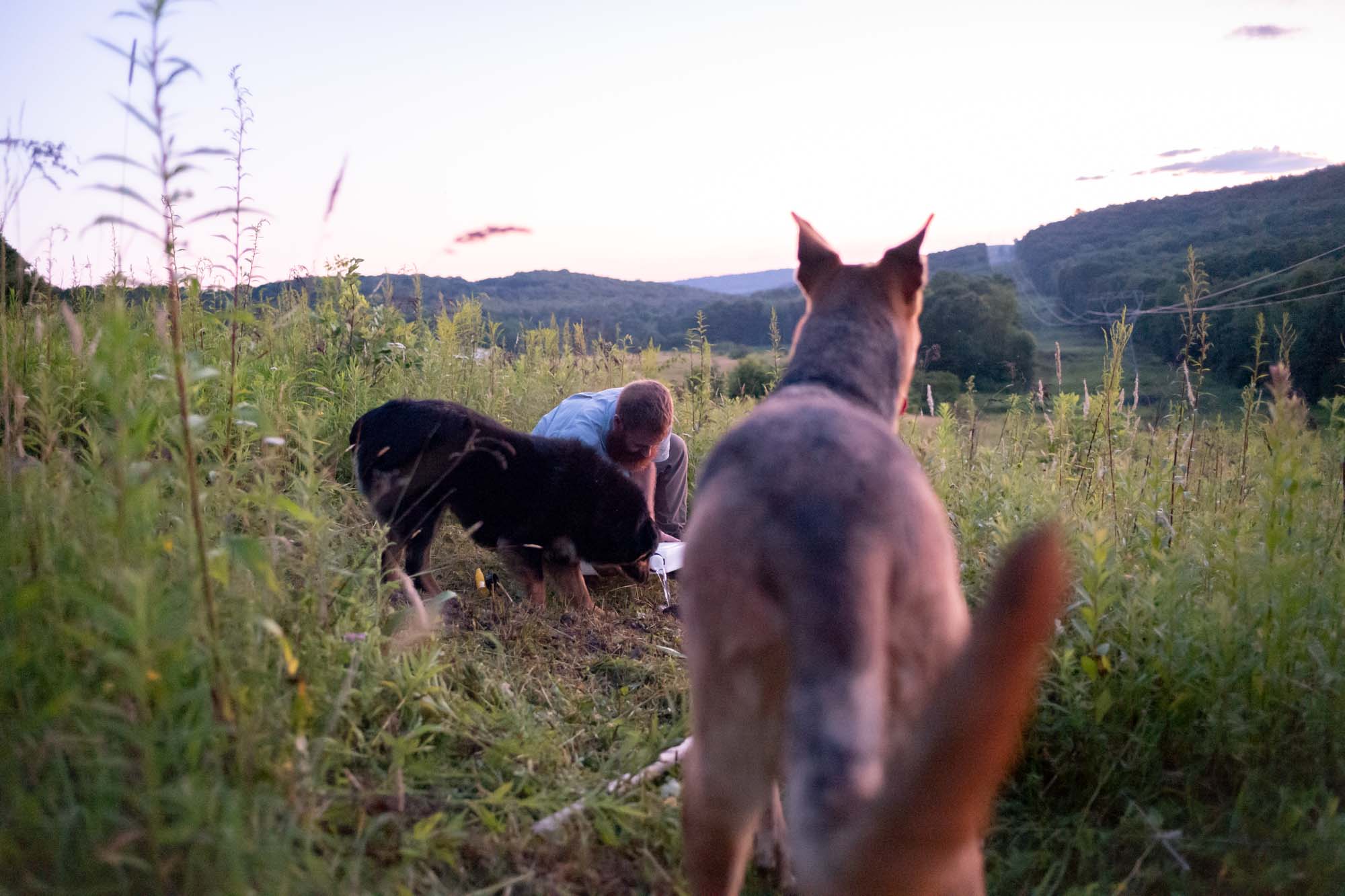
We become a little more efficient each time we plant a tree. We’re following general best practices: planting at the appropriate times, digging holes that are twice the width and the same height at the roots or pot the trees are in, and watering thoroughly. We weed-eat large areas around each planting to minimize competition for light.
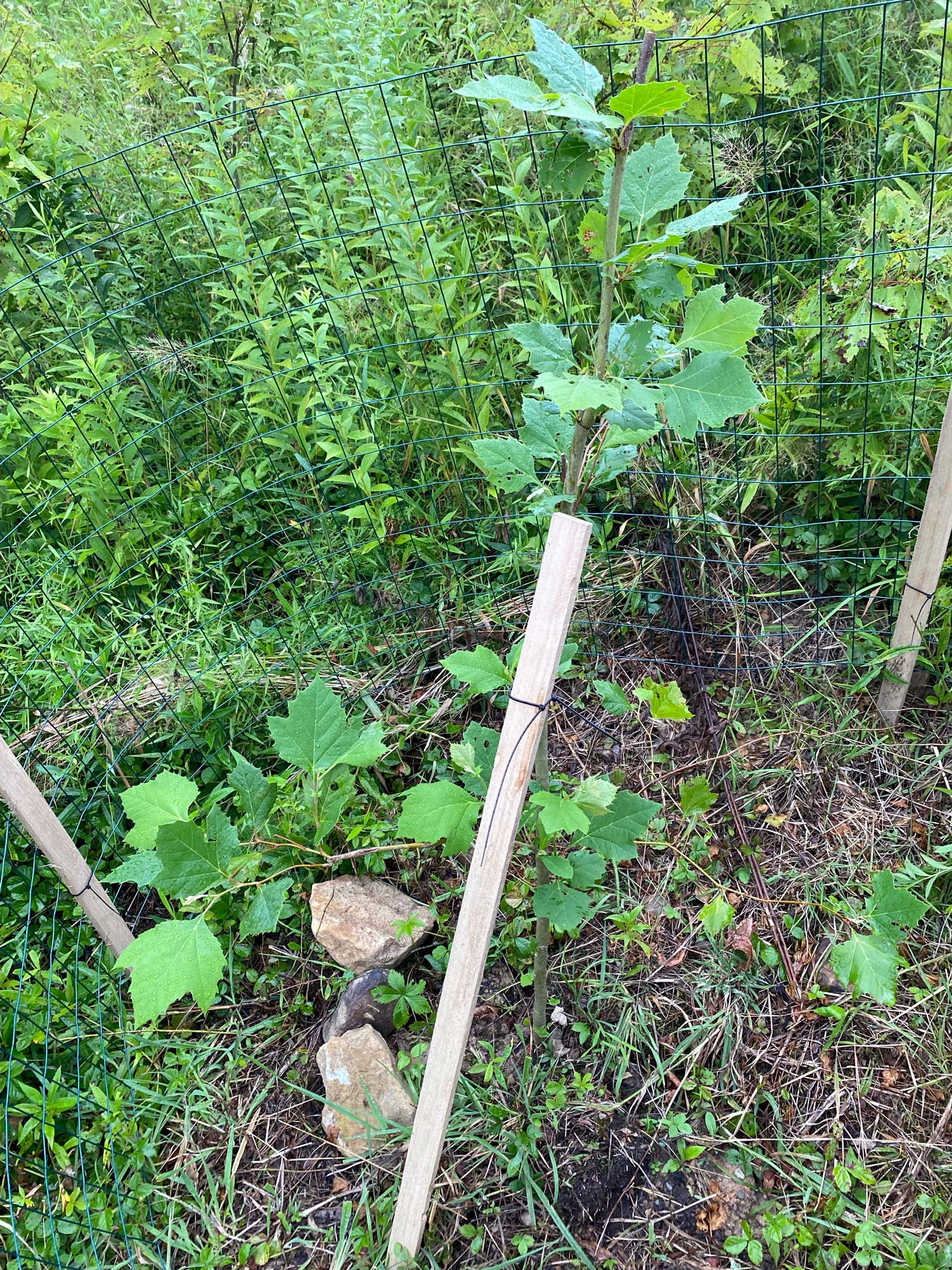
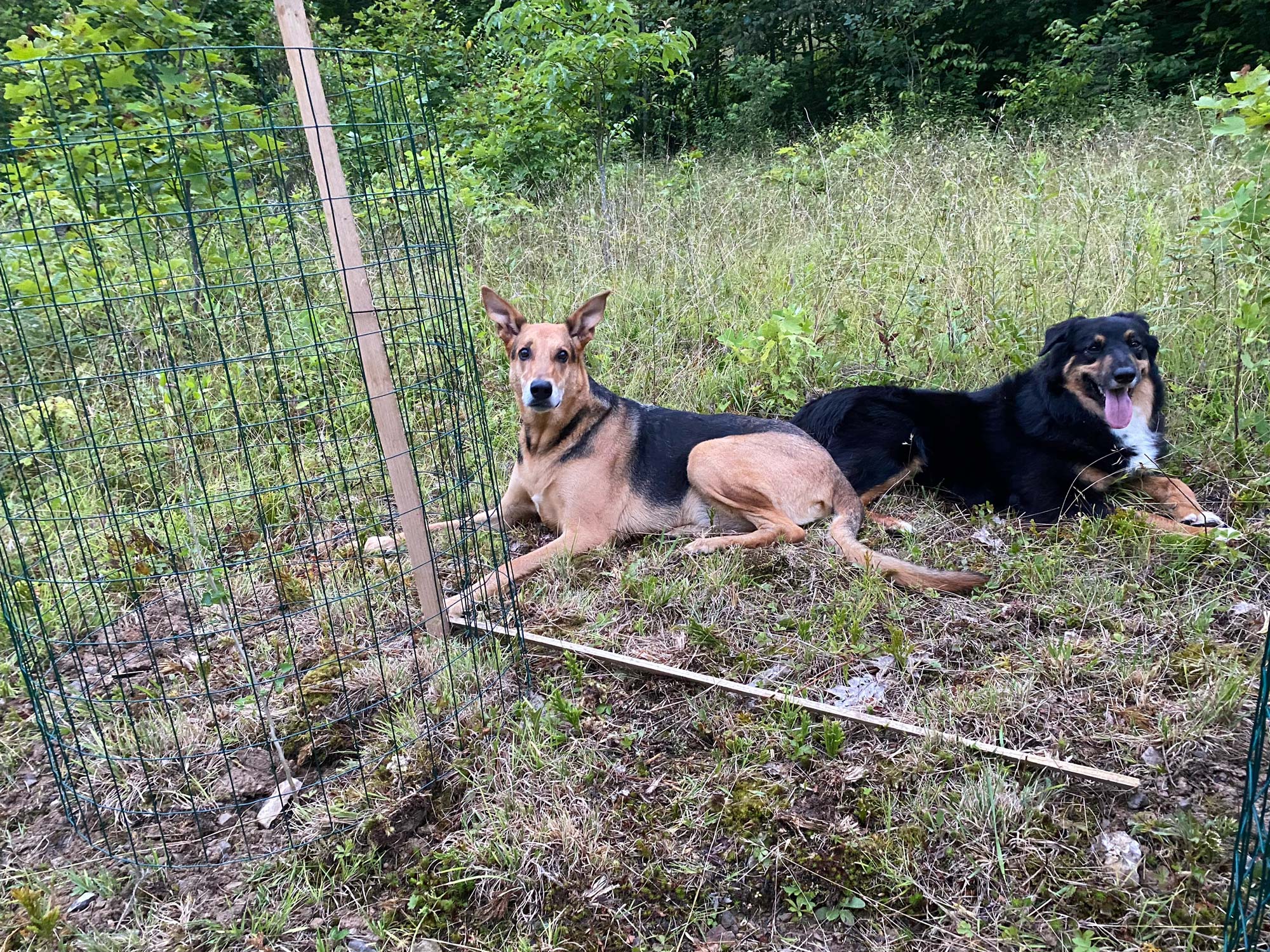
Deer pose a major threat to young trees. Until trees can grow out of the reach of agile deer, their fragile leaves are at risk of being eaten. We are experimenting with appropriate protection from deer, starting with simple garden fencing and wooden stakes that are already have on hand. In the few days between planting the trees and fencing them, deer had already nibbled on some of the leaves. Now, we’re monitoring the young trees to ensure that they are adequately protected.

Black Willow
When we first got our property, we did not have any willows present. We purchased Black Willow from Arcadia Natives and planted it in our wetland, safely outside of the power line right of way. We hope to add more oaks along our future pond.

American Sycamore
We have experimented with transplanting American Sycamore this year with mixed success. With more careful planning, we hope to transplant more sycamores in the fall. Like the willows, we’re planting these trees in the wettest parts of our property.

American Chestnut
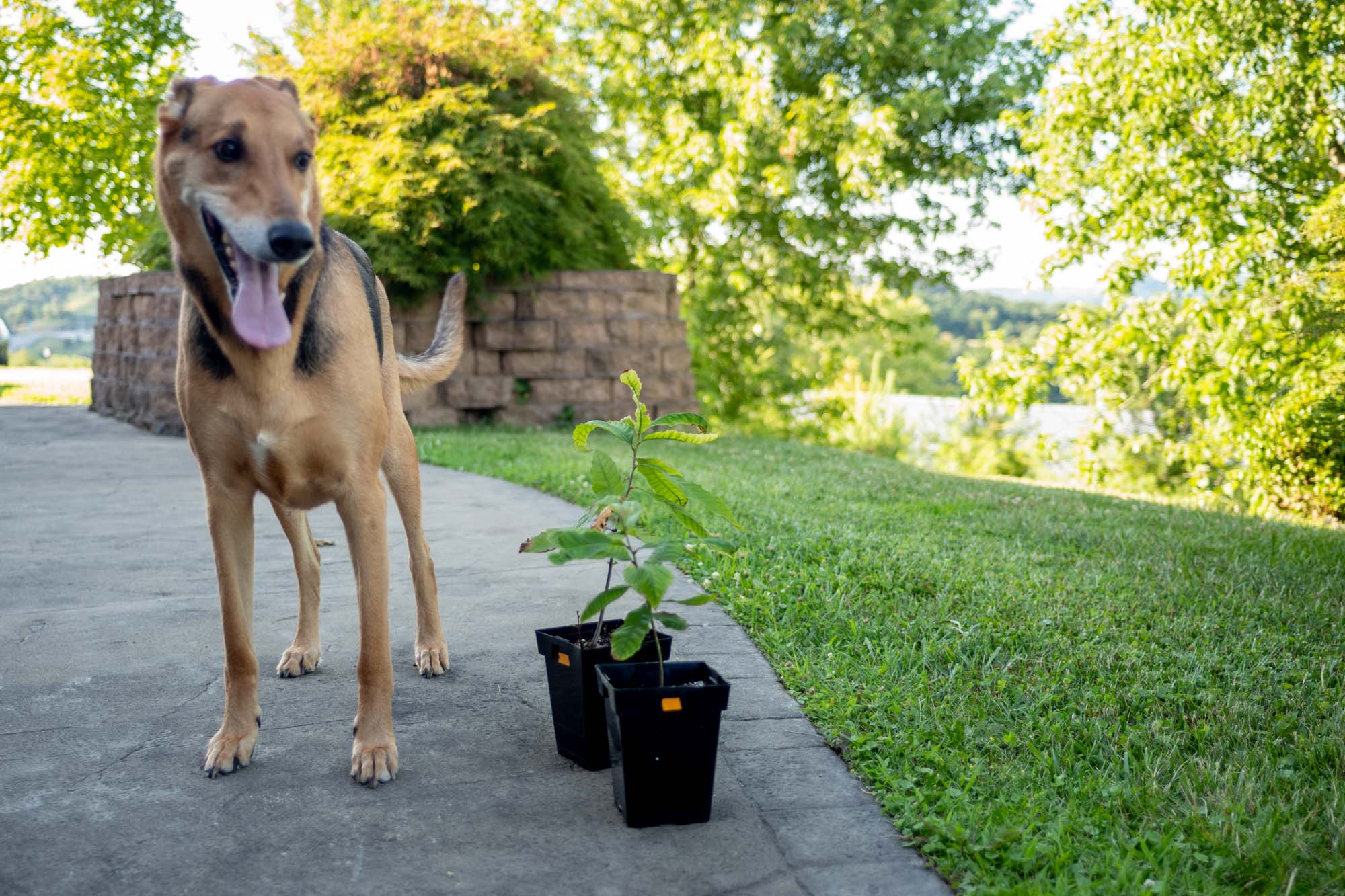
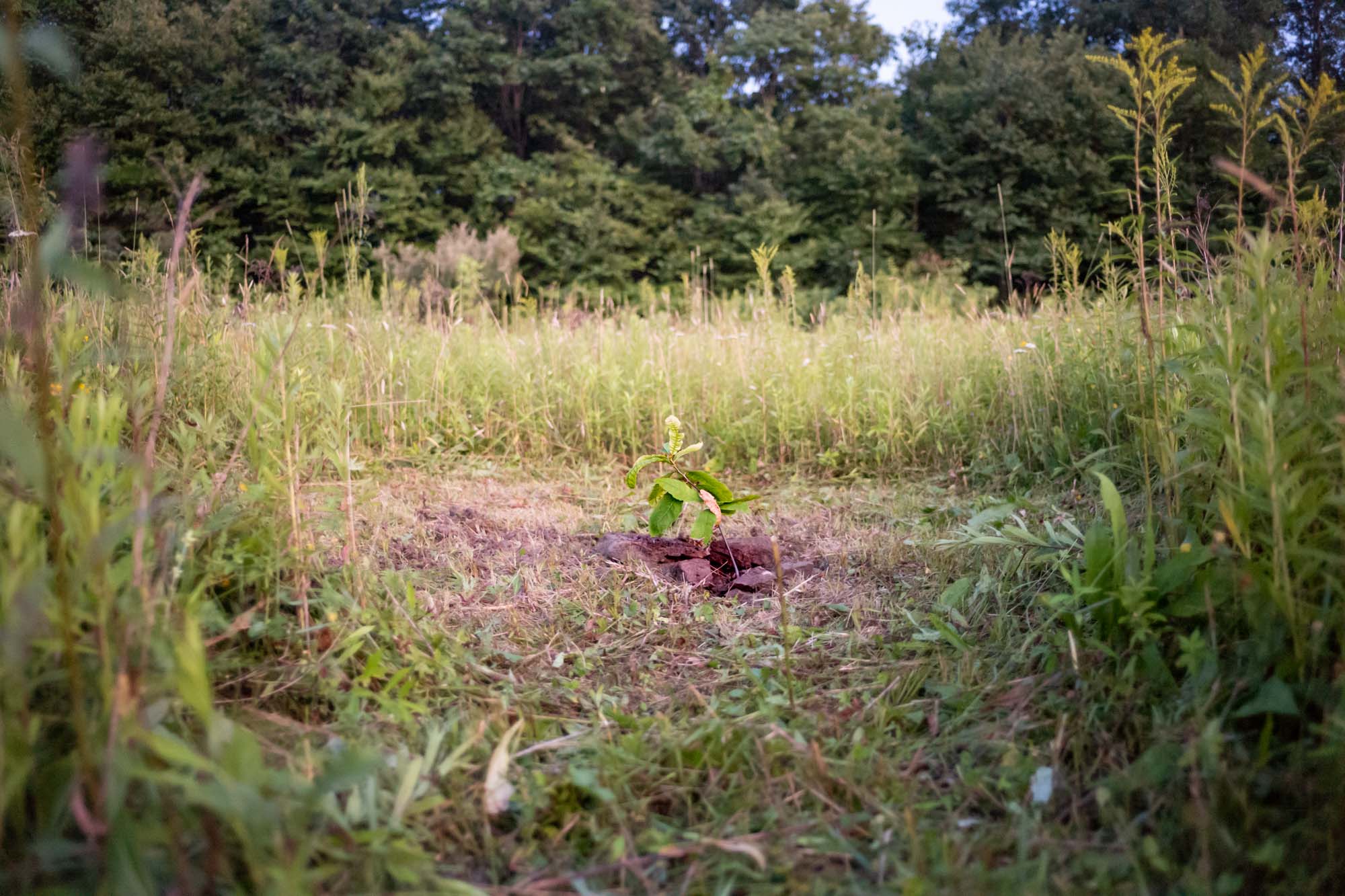
We were excited to purchase a few American Chestnut seedlings at the West Virginia Master Naturalists conference. They are from an American Chestnut (likely with some Chinese Chestnut genetics intermixed) that is about 15 years old and growing near Elkins, WV. The parent tree is showing significant damage from the chestnut blight that has claimed all of the American Chestnut trees in the US for decades, and is expected to only live for a few more years. Although we know that these trees will not last long – likely 20 years at most – we hope they are able to reproduce in their lifetimes and are happy to have them on our property.
Future tree species additions
There are many more species of trees we want to add to our property over time, including:
- More willows
- Dogwoods
- Pawpaws
- Sumac