Before you read: I mention eBird a lot. If you don’t know what that is you can check it out here. We also have a handful of general WV birding resources here.
“We’re detouring!” I announced before we had even gotten off of I-79 to wind west toward our destination. “I only have one species on eBird for Gilmer County. Let’s go to Cedar Creek State Park — it only adds 20 minutes to the route anyway.”
One of the more enjoyable aspects of birding is that it encourages you to dig into places that you may otherwise never think twice about. This was the case today, as we voyaged down the interstate to peel off and take less-traveled roads to Calhoun and Wirt counties. This duo ranks low in a lot of lists, like WV Counties by Population (53 and 55 out of 55), and high in others, like 50 Least eBirded US Counties (2 and 10, measured by the number of submitted checklists). We weren’t destined to add to either county’s population, but planned to take a few hours in each to bump up the checklist count.
I had some motivation to visit these counties, too, for my personal map of counties in WV that I’ve birded. I take a lot of pride in exploring and showcasing West Virginia, and these ticked off two of the last three counties I needed to record bird sightings in for the state. That’s a goal that a lot of US birders have: to color in each of those counties on our state’s eBird maps to digitally stamp our voyaged paths. It’s a nice provocation, I think, especially in rural areas like these that are truly data deficient.

But sometimes when you’re heading out to bird for the sake of claiming to cover a new place, you end up with a lot of somewhat aimless roadside stops with a couple of quick-to-show species of birds, and that’s it. Especially if you’re heading to a place that barely has a town that’s graced with a gas station, let alone an infrastructure for nature exploration.
As an afterthought when we got home that night, I checked AllTrails to see if any public hiking paths were in the database. Nada. I grew up on a farm with hundreds of acres to explore, but even with that, local parks and trails were formative in building my passion for nature. They molded me into something for the better. What’s it like to not have those opportunities close by?

I’m not the only one who thinks that. I know the state park system of WV well, but the Wildlife Management Areas are more scattered and numerous, so my first step in planning the outing was checking those maps. Sure enough, we had a half dozen WMAs to explore between the two small counties. Googling for maps and ideas of what to expect, I was surprised to learn that pretty much everywhere we planned to explore was part of a 30,000-acre expansion of managed public lands that the state had added in the area in just the past two years. The DNR has some delightfully enthusiastic quotes about how these expand hunting, fishing, wildlife enjoyment, and conservation measures for a region that has lacked these opportunities.
If you’ve driven around much of the state, you’ll know what I mean when I say it’s sometimes disheartening to take in the views of living conditions along the way. You can get smacked with the disparity between the beauty of these hills and the sacrifices people make to live in them. But we still venture out, adding nominal data points to eBird, while enjoying the hobby side of birding. And West Virginia chips away at adding nominal opportunities here and there around the state. Taking advantage of our state’s best asset – nature – is a good way to do it, I think. For our world and for the people here.

Planning to Explore Gilmer, Wirt, and Calhoun Counties
Our plans came together quickly; I was supposed to be out of town this weekend, but Covid persists and plans change and we found ourselves with a free day to explore. Jimmy whipped out his notes of county roads that he’s compiled for the entire state, marking places with potential for his Jeep to enjoy, and I cross-referenced eBird county and state records to see if there were any species we should target. Then we looked at online maps for green splotches for potential public lands to check out. Each county had a couple teeny “city” parks, but the thousands of acres of freshly-declared Wildlife Management Areas stole our attention.
Blue Moose Cafe
In the morning we packed snacks, downloaded offline maps, grabbed our binoculars and cameras, and sped straight to Blue Moose Cafe in Morgantown. It’s our weekend tradition to get coffee or brunch, so today, we opted for bagels on the go. Onward we charged.
Cedar Creek State Park
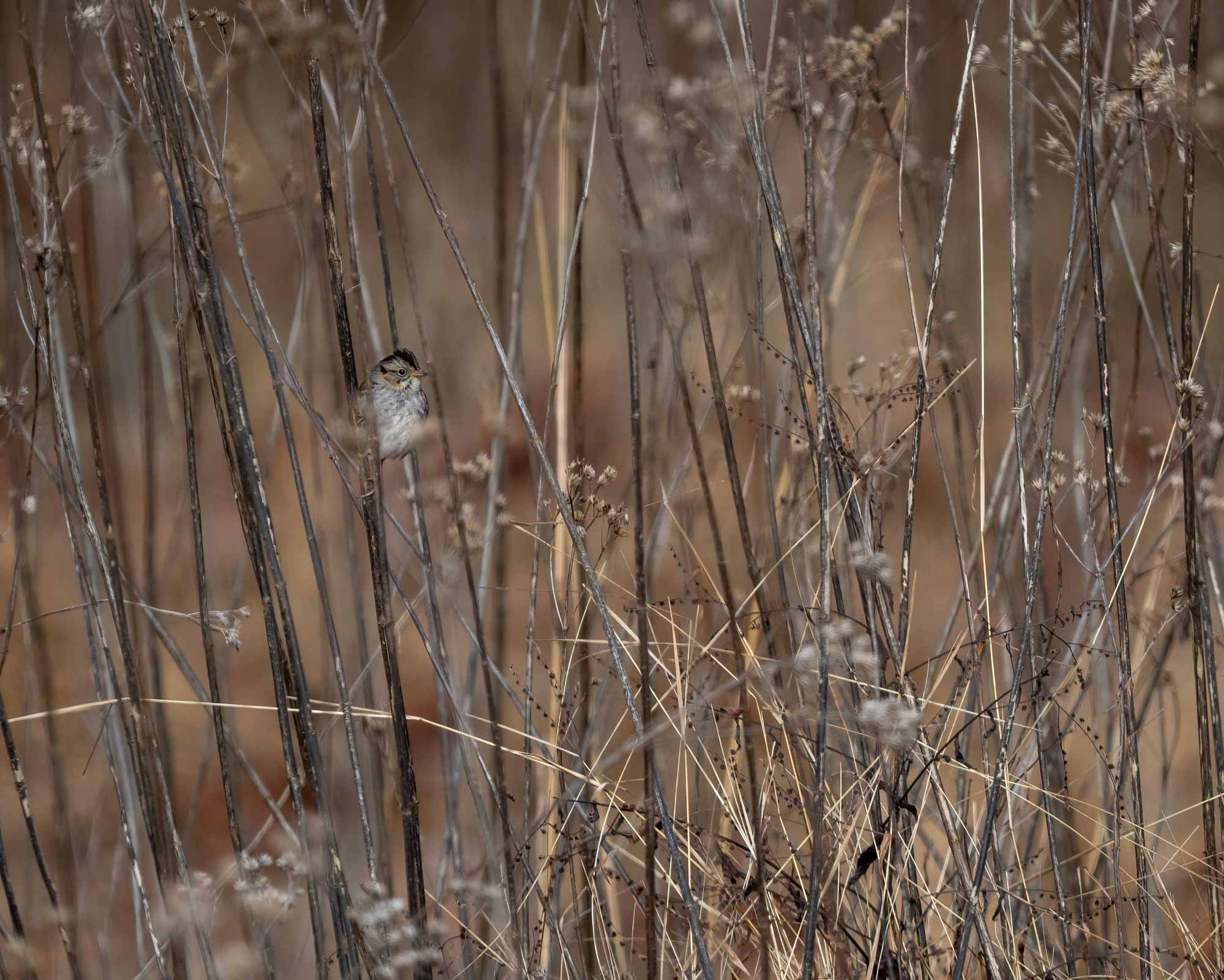
Just as a roost of Turkey Vultures lifted, pattering their wings awkwardly before climbing to thermals to start their day, we turned off the Burnsville exit and drove west, stopping first at Cedar Creek State Park to tick off a few Gilmer County birds. The park has an enormous number of pleasant campsites and several trails, but only the ponds were occupied by humans – fishermen – as we ventured around. We tracked a flock of American Tree Sparrows through some grasses with bluebirds calling in a field nearby before heading on to our main stops.

Little Kanawha River Wildlife Management Area
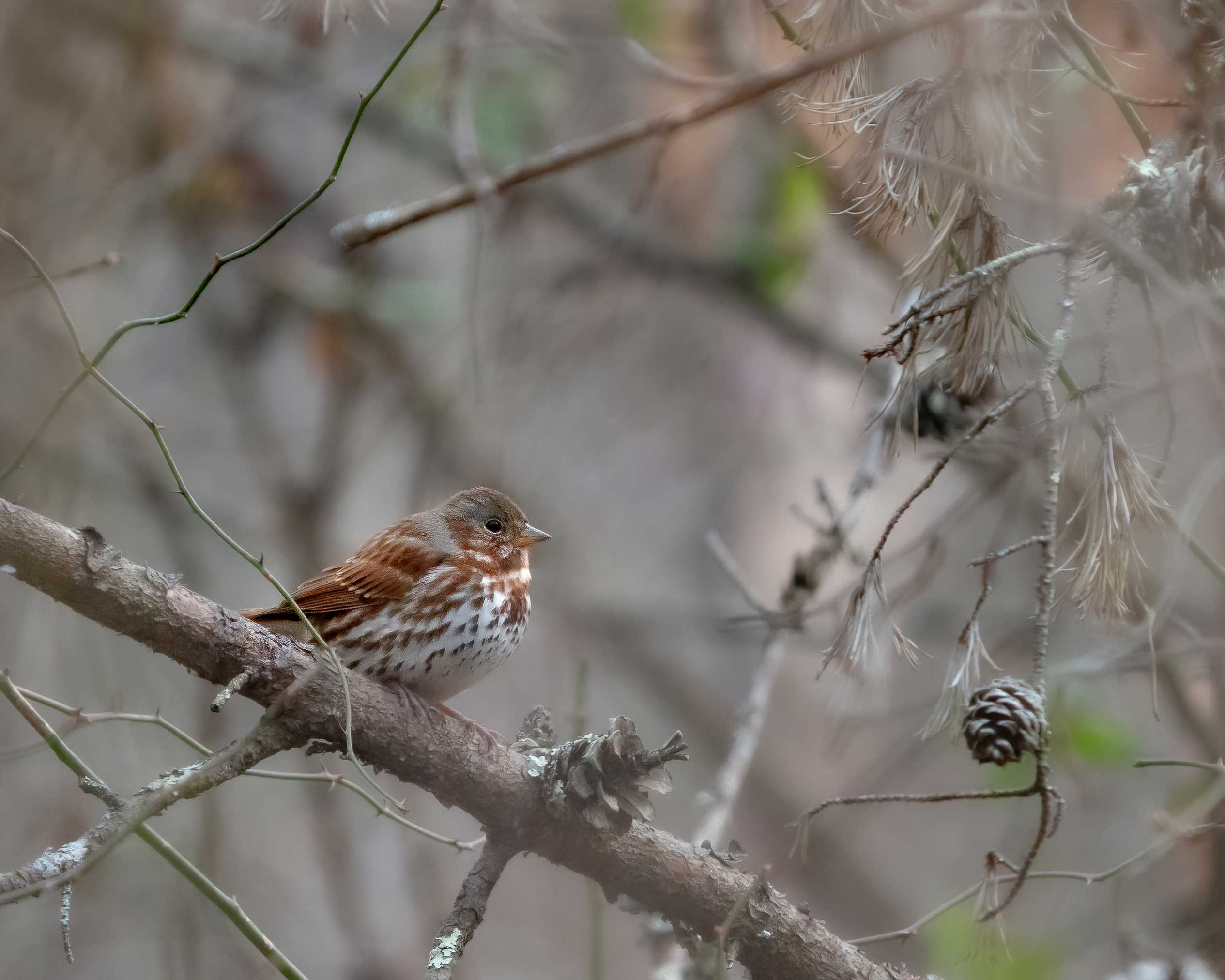
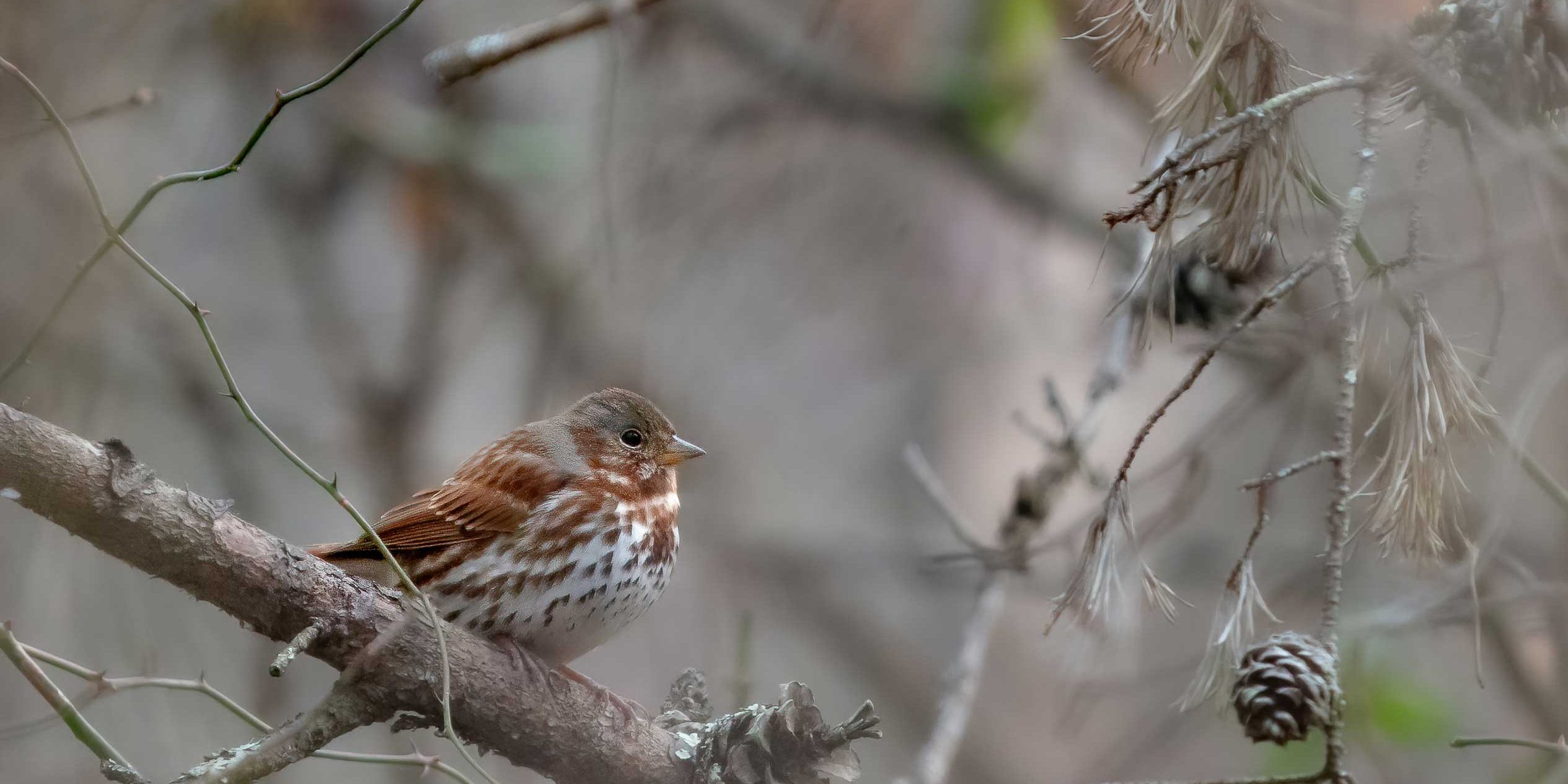
We spent the most time at Little Kanawha River Wildlife Management Area, where the gravel roads wound through a mix of deciduous and coniferous trees. Right as we pulled in, we found a Hermit Thrush bravely guarding a puddle that was melted enough for bathing. We drove to the farthest point on one road that dead-ended in a horseshoe bend of the namesake river. A flock of Dark-eyed Juncos popped up along the way, and “Oh! Fox Sparrow!” — a cheeky sparrow with a gorgeous pattern of rich red splotches in our eastern subspecies. I didn’t expect that to be the first of nearly a dozen Fox Sparrows on our checklist, but we were treated with many more, including a flock of six that stuck tightly together through the bramble. We don’t see them much around Morgantown. The Appalachian lowlands are interesting like that — the ecological changes are subtle between where we live and the Ohio River basin, and the birds are some of the best indicators of the differences. As I pondered the sparrows, I thought of Summer Tanagers and how they make some invisible line around the same area for the eastern limits of their breeding territory in WV. They pick up again on the other side of the Appalachians, but they keep a much wider berth than many other eastern-US lowland bird species.
Palestine Fish Hatchery
We peeled farther west into Wirt County, stopping first at the Palestine Fish Hatchery. I noticed it on eBird when I saw there was a single county record for Stilt Sandpiper, although it was from the 1950s. Fish hatcheries are interesting and hold promises for birds, and it wasn’t far from the main road. What we found was mostly a collection of feral cats, but we also lucked out with a “Robin hopped up in that pine, oh, wait, no, Sharpie!” Sharp-shinned Hawk that was focused on its hunt.

Elizabeth, West Virginia
On we went to the Wirt county seat of Elizabeth where a Piggly Wiggly grocery was perhaps our biggest surprise of the day. We popped in a gas station and got hot water for cups of ramen that we brought. The broth can really hit the spot on a blustery winter day. Jimmy spotted some pepperoni rolls with a JR Donuts logo on the bag. I was brought back to sweet memories of getting fresh donuts for visiting birders during a Bird Watcher’s Digest Reader Rendezvous in Marietta. That was several years ago now.
Hughes River Wildlife Management Area
We took off north toward our last stop, Hughes River Wildlife Management Area, and lightly birded as the sun dropped down. We finished our day teetered on top of peaceful ridgelines before driving to Route 50 and going back home.

Visiting Calhoun and Wirt Counties
If you want to explore the area, there’s a lot to discover. If you’re birding, don’t rely on the hotspots — Calhoun only has one and Wirt three, anyway, and they don’t offer much. Instead, use DNR guidance and check out the WMAs. I bet there are some fun breeding species to discover there (Brown Creepers come to mind, for one). The areas aren’t far from North Bend State Park, which has fantastic cabins along with a lodge, restaurant, and the like. It would be a great home base for a weekend of exploration that bleeds into these rural areas. They’re worth the detour.
Gallery